Tongits: Rules, Round Flow and Beginner Guide | Bet100
Tongits is a Filipino-style card game listed in the cards category on Bet100. The precise table rules depend on the version shown, so review its instructions before joining and treat every hand as a separate contest.
In brief: check the deal and turn order, learn how the current table handles melds, discards and the stock, then make decisions only under the displayed rules. A Tongits Demo can help with familiarizing yourself with controls if one is offered, but it cannot promise a result.
Start by understanding the table and deciding on a time and spending limit. Only continue if the game conditions are clear and participation fits your plan.
Related card games

Tongits mechanics: cards, turns and table decisions
The most important mechanics are the ones specified by the active table: how cards are dealt, which combinations count, what a turn allows, and how a hand ends. Check those rules before you try to plan around the cards in your hand.
In a typical Tongits format, players receive cards and take turns drawing and discarding while building valid combinations. A meld commonly means a qualifying set or sequence, but the exact card requirements and whether a player may lay off cards depend on the version. Use the in-game rules to confirm each definition rather than relying on a remembered house rule.
- Draw: the current player takes a card from the source permitted by the table, such as the stock or a discard pile when allowed.
- Form combinations: identify which sets or runs meet the displayed meld rules; do not assume a combination is valid until the table accepts it.
- Discard: end the turn using the required discard action and observe any restrictions on which card may be released.
- Resolve the hand: the table explains what happens when a player calls an end, challenges, or the stock reaches its limit.
Some versions use deadwood totals, a challenge or “draw” decision, or a special way to win by emptying a hand. These details are not interchangeable across every Tongits table. Read the on-screen explanation for the specific action, any scoring consequence and the conditions under which the hand closes.
A player may consider visible discards and their own cards, but this does not remove uncertainty about cards held by others or remaining in the deck. Avoid treating one opponent's move as proof of a fixed strategy. The purpose of learning the mechanics is to understand choices, not to promise an advantage.
For a different card title, Wild Ace has its own display and instructions. Compare only what each game's current rules actually state.
What the Tongits game image can—and cannot—show
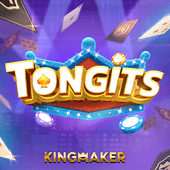
The Tongits image identifies the title, but it is not a screenshot of a live hand and cannot confirm table rules or a winning move. Use the active game's own screen and help panel for that information.
The artwork is useful for recognizing the listing among Bet100 games. It does not reveal the card distribution, turn sequence, point values, opponent decisions, or conditions for calling a hand. Do not infer those elements from the icon or from the name alone.
When the table opens, look for the card area, your hand, available draw and discard controls, turn indicator, current status and rules access. If a help overlay obscures the table, close it only after you have understood the instructions. If the screen is still processing a move, wait for its response before selecting another control.
A Tongits Demo, if the lobby or table explicitly offers one, may provide a low-pressure way to locate controls and observe an example hand. Availability may differ by account or game client. It is not evidence of how a later paid hand will resolve, and no practice sequence can establish a reliable prediction.
Beginner notes for a first Tongits session
For a first visit, clarity matters more than speed: learn the turn buttons, confirm the scoring and ending conditions, and keep your decisions within a limit set beforehand. If a rule is unfamiliar, pause and read it before acting.
- Check what combinations are valid and whether melds can be placed or extended during a turn.
- Learn how the client shows whose turn it is, which action is available and whether a move has registered.
- Understand how the table counts unmelded cards or otherwise settles a hand before you choose a stake.
- Set a session duration and a spending boundary; stop when either one is reached.
Do not assume that a familiar physical-card rule applies to every digital version. Interface buttons may use local terms, table variations can have different scoring, and the current help screen takes precedence over a general guide. If a result or balance needs clarification, consult the game history or support route before joining another hand.
Some visitors may arrive looking for a Tongits Demo. First check whether the active game explicitly provides a practice option. If it does, use it to learn the controls only; if it does not, do not mistake a promotional preview or static image for a playable free mode.
The Bet100 slot and card categories contain different formats. A slot's spin or feature rules do not explain a card game's turn decisions, and lessons from Tongits do not automatically carry over to Bet100 slots. For a general overview of the catalogue and navigation, visit the Bet100 home page.
How to compare Tongits tables and alternatives
A useful comparison starts with the table's rules, scoring, turn options, stakes and session conditions—not with a promise about who will win. Check that you are comparing like with like and that each detail is current.
For Tongits, confirm whether the table explains a draw, challenge, or hand-ending call, and how it resolves ties or remaining cards. Then review the permitted stake range and any fee or entry terms shown before a hand. Never compare an unverified rule from one version with a different table and assume the outcomes work the same way.
Bet100 slots and Bet100 slots listings may be useful if you prefer a different game pace, but they are not equivalent to a card table. Read the rules for each title, consider whether its style suits your preferences, and use a budget that remains unchanged when switching between categories.
No short run of hands, observed discard pattern, or advertised statistic makes a particular Tongits result certain. If a game publishes return information, its meaning and conditions should be explained by the game provider; do not treat a long-run measure as a forecast for one table or an individual's session. Choose for entertainment, not as a financial plan.
The usual Tongits hand from deal to decision
A hand generally moves from the deal into alternating turns, with each turn involving the actions permitted by the table, and ends when its stated finishing condition is met. The exact sequence and available choices are defined in the live rules.
- Review the deal. Check your cards, the table state and any visible indicator of the starting player or first action.
- Take the available turn. Draw or select a card using the options permitted by that version; confirm the action before continuing.
- Assess combinations. Review whether your cards form a valid meld under the table's definitions and whether any eligible action is available.
- Discard and pass play. Complete the required end-of-turn action, then wait for the next player's move and observe the updated state.
- Resolve the hand. When a listed ending condition occurs, read the game's result and scoring explanation before starting another hand.
The hand's rhythm comes from repeated decisions rather than a guaranteed sequence of cards. A draw that looks promising may not complete a combination, and an opponent's discard does not prove that a specific card will appear later. Follow the turn prompts, avoid repeated inputs while an action is processing, and check that the hand is complete before you leave the table.
A clear stop rule is part of the flow too: after the result is shown, compare the session with the limit you set before play. If it is reached, leave the table rather than increasing the stake to recover a loss. If the result display seems inconsistent, pause and review the hand record or ask support to clarify it.
Tongits facts to keep in mind
Tongits is categorized as a cards game here; its precise rules, scoring and table options must be confirmed in the version you open. This summary distinguishes the general guide from facts that only the live game can establish.
- Title: Tongits.
- Listed category: cards.
- Typical format: a turn-based card hand; validate the active table's specific actions and ending conditions.
- Demo availability: use a practice mode only if the game or lobby clearly offers it.
- Results: uncertain; no guide, pattern or prior hand guarantees a future outcome.
- Responsible participation: meet local eligibility rules and use only a preset entertainment budget.
A Tongits Demo is not guaranteed to be available in every lobby. If a practice option is present, it can help you understand interface controls but does not reproduce a promise about real-money play. The same care applies when reviewing offers: Bet100 promotions have their own terms, which do not change the rules of a card hand.
If you want to explore another card-format option, Oneshot Fishing has a separate style and rules. It is not a Tongits variant; visit Oneshot Fishing only if you would like to compare a distinct game category, and read its own information before acting.
A measured next step for Tongits
If you understand the table rules, meet the local eligibility requirements and have a clear time and spending limit, you can decide whether to continue; if not, pause and get the information you need first. No bonus, demo or game title requires you to play.
Before opening a hand, protect your account, confirm the selected table and stake, and make sure that any offer conditions are clear. Keep the activity within a discretionary budget and stop when your boundary is reached. If play no longer feels recreational, take a break and seek appropriate local support.